Last week we took our 'behind the scenes' approach to a whole new level and invited a group of 10 customers to come along and see first-hand how our UK-paper is made in a historic mill town of Burneside in the Lake District.

We were privileged to see two very different kinds of paper-making in one day.
—
UK Paper Mill Tour Part One: James Cropper Paper Mill
We began at the James Cropper paper mill, which has been making some of the world's best coloured papers for over 200 years.
We toured the colour lab, to learn about the alchemy behind mixing the colours, making sure they 'take' to the fibres (specially tricky with recycled materials), and testing them for colour-fastness and changes in different lighting conditions.
This is where some of our favourite coloured papers are made, such as rust, mustard and flint.


Next we walked the route that the paper takes through the factory: from raw pulp to finished sheets of paper.
It begins in a warehouse full of sustainably-sourced pulp and recycled materials, such as used coffee cups and office waste. This is shredded, pulped and cleaned to make a fresh batch of pulp for paper-making.
It then gets 'couched' or laid down onto a huge mesh, and the extremely high water content begins to drain away, first simply via movement and gravity, and then by passing through a series of heaters and rollers, which dry it out and make the surface smooth. This part of the tour was extremely hot and steamy!


—
UK Paper Mill Tour Part Two: Paper Foundation
Next we took a stroll up a country lane to see a very different kind of paper-making. Paper Foundation is a charity set up in 2016, to keep valuable skills alive and to collect equipment that would otherwise go out of use.
Founded by Mark Cropper, whose family have been making paper in Burneside for centuries, the team have all learned hands-on paper-making over the past 10 years. This began with a process of training with a couple of Irish paper-makers who were soon to reture, and their skills and know-how would have been lost to memory, had Tom and the team not been around the receive their wisdom and put it into practice.
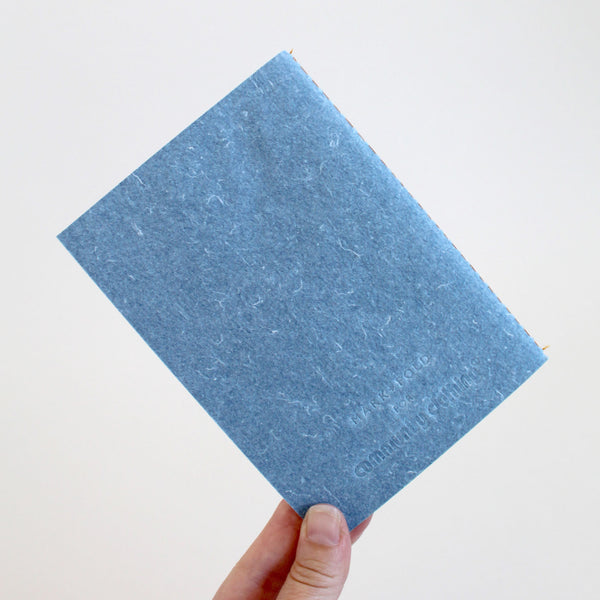
Paper Foundation now make specialist papers for artists and archivists, as well as paper-lovers like us. This is where our hand-made recycled denim paper is made for our Community Clothing notebooks. Scraps are sent up from the cutting room of their Lancashire jeans factory, to be shredded and pulped, then turned into beautiful sheets of blue paper (with no dye, bleach or other ingredients added — only water and the cotton and dyes contained in the denim itself).


We were very privileged to round off the day with a visit to Paper Foundation's offices and a talk by Mark Cropper about the history of this place and his family's role in paper-making here.
Paper Foundation also collects paper-making equipment and tools such as deckles and watermarks, books and decorative papers.


Huge thanks to all at James Cropper Paper and Paper Foundation for enabling us to bring customers along to see first-hand how paper is made, and what goes into creating the lovely materials we use in our stationery.
Many thanks to Jim Marsden for the lovely photos.